

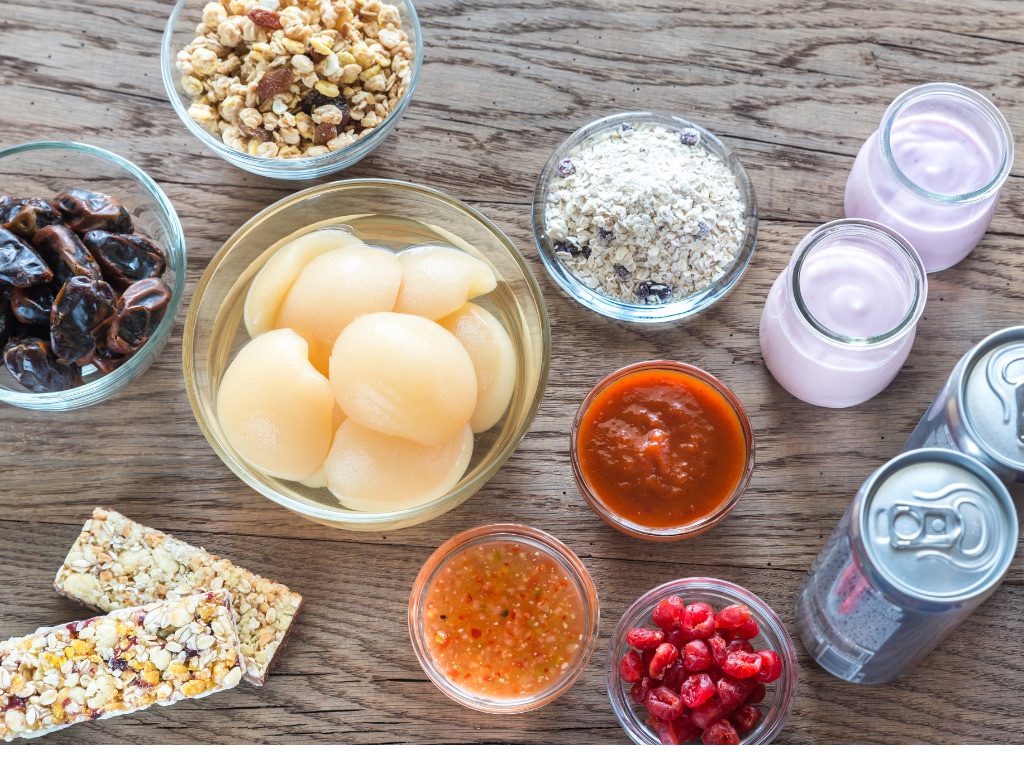
Did you know that even when you’re carefully tracking your calories and macros, hidden sugars could still be sneaking into your diet? From salad dressings to condiments, everyday products are loaded with sugar under different names, making it harder than ever to stay truly sugar-aware. Condiments, sauces, dressings, and packaged items frequently contain significant amounts of sugar under unfamiliar names, making it difficult to stay truly sugar-aware.
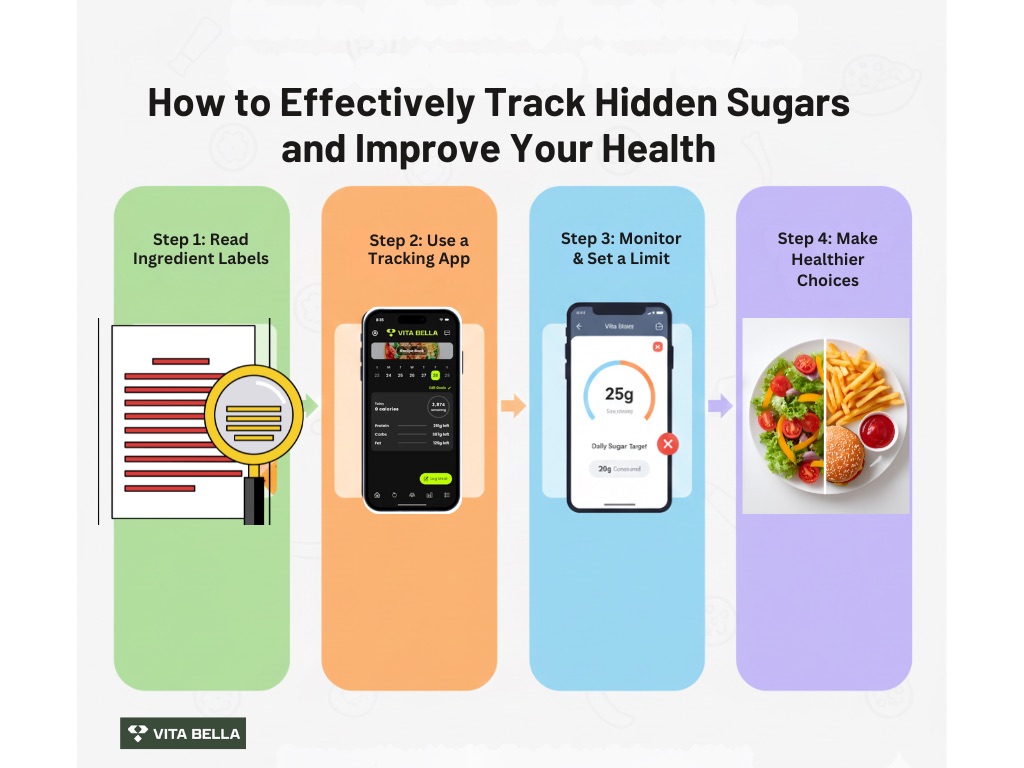
At Vita Bella, we know how important it is to stay on top of your health by understanding what’s in your food. Even when you’re tracking your calories and macros, hidden sugars in everyday foods can still sneak in, undermining your wellness goals. Let Vita Bella help you make informed choices with our tracking app, which empowers you to monitor your sugar intake, macros, and overall health. Start your journey to better health today!
How Food Companies Hide Sugar on Labels?
One of the biggest challenges consumers face is that sugar rarely appears simply as “sugar” on ingredient lists. Instead, manufacturers use multiple alternative names, making it harder to recognize total sugar exposure. Products containing multiple sugar sources often appear healthier than they are because each sugar appears lower on the ingredient list, masking the total sugar load.
Common hidden sugar names include:
Corn syrup
High-fructose corn syrup
Sucrose
Maltose
Fructose
Molasses
Honey
Malt syrup
Maltodextrin
Invert sugar
Malt extract
According to research 2, food manufacturers often use terms like “no added sugar” or “reduced sugar” that can be misleading if calorie reductions aren’t meaningful, confusing consumers about the actual sugar content. They also list many sugar forms or sweeteners under different names (e.g., syrups or scientific‑sounding sugars) so that total sugar isn’t obvious at a glance, and consumers may misinterpret nutrition claims, leading to hidden added sugars on products.
Why Liquid and Condiment Sugars Are Especially Problematic?
Sugars consumed in liquid or semi-liquid forms, such as sauces and dressings, are metabolized rapidly and provide little satiety, meaning they don’t help you feel full. It has been shown that liquid sugars lead to weaker appetite suppression than solid foods, increasing the likelihood of overeating later. Research 3 shows that carbohydrates consumed in liquid form (e.g., sugary beverages) generally lead to weaker feelings of fullness compared with solid carbohydrates, which can contribute to higher overall energy intake later.
What is the relationship between sugar, insulin, and metabolic health?
Frequent exposure to hidden sugars causes repeated spikes in blood glucose and insulin. Over time, this can contribute to insulin resistance, even in individuals with normal body weight. Sugar-sweetened beverages (SSB), which are now the primary source of added sugars in the U.S. diet, are composed of energy-containing sweeteners such as sucrose, high-fructose corn syrup, or fruit juice concentrates.
Prospective human studies 4 demonstrate that higher intake of added sugars is associated with reduced insulin sensitivity and an increased risk of metabolic syndrome. Higher levels of SSB intake could be a marker of an overall unhealthy diet as they tend to cluster with factors such as higher intakes of saturated and trans fat and lower intake of fiber.
Frequently asked questions
Yes, hidden sugars can hinder your weight loss efforts, even if you’re tracking calories and macros. These sugars, often found in sauces, dressings, and processed foods, can contribute to excess calorie intake. Without tracking hidden sugars, it's easy to unintentionally consume more than your body needs, which can slow your progress. Being unaware of hidden sugars can cause you to underestimate your actual daily intake.
Yes, it can be challenging to spot hidden sugars. Many processed foods, including salad dressings, condiments, and sauces, list sugars under various names, such as corn syrup, fructose, and molasses. Without clear labeling or proper tracking, it’s easy to consume more sugar than intended, even if you’re careful with other foods. Understanding these hidden sugars helps you stay aware of your total sugar intake.
Yes, Vita Bella’s app helps you track not only your calories and macros but also hidden sugars in everyday foods. With the app’s personalized features, you can easily identify sources of hidden sugars and make more informed food choices, ensuring you stay on track with your health goals. The app allows you to monitor every aspect of your nutrition for a more holistic approach to your health.
Yes, tracking hidden sugars can lead to better health outcomes. By monitoring your sugar intake, especially from processed foods, you can make adjustments to support weight loss, improve insulin sensitivity, and reduce the risk of chronic diseases such as diabetes and heart disease. It allows for more balanced, informed choices. This proactive approach helps you manage your sugar consumption effectively, promoting long-term wellness.
References:
Dreher, M. L. (2018). Whole fruits and fruit fiber: Emerging health effects. Nutrients, 10(12), 1833. https://doi.org/10.3390/nu10121833
Patterson, N. J., Sadler, M. J., & Cooper, J. M. (2012). Consumer understanding of sugars claims on food and drink products. Nutrition Bulletin, 37(2), 101–107. https://doi.org/10.1111/j.1467-3010.2012.01958.x
Pan, A., & Hu, F. B. (2011). Effects of carbohydrates on satiety: Differences between liquid and solid food. Current Opinion in Clinical Nutrition and Metabolic Care, 14(4), 385–390. https://doi.org/10.1097/MCO.0b013e328346df36
Malik, V. S., Popkin, B. M., Bray, G. A., Després, J.‑P., Willett, W. C., & Hu, F. B. (2010). Sugar‑sweetened beverages and risk of metabolic syndrome and type 2 diabetes: A meta‑analysis. Diabetes Care, 33(11), 2477–2483. https://doi.org/10.2337/dc10‑1079
Weaver, D., & Finke, M. (2003). The relationship between the use of sugar content information on nutrition labels and the consumption of added sugars. Food Policy, 28(3), 213–219. https://doi.org/10.1016/S0306-9192(03)00028-9