In the clomiphene vs enclomiphene comparison, both drugs are selective estrogen receptor modulators (SERMs) that raise testosterone by working through the body's own hormonal signaling rather than replacing it. Clomiphene is a mix of two isomers, enclomiphene and zuclomiphene; enclomiphene is the trans isomer on its own (Rodriguez et al., 2016). Leaving out zuclomiphene, a long-acting estrogen receptor agonist, is the reason enclomiphene was developed as a separate drug, but as of a 2016 review the two had not been compared directly in men (Rodriguez et al., 2016). Men looking into SERM testosterone therapy will typically encounter both options, and the chemical distinction is worth understanding before choosing between them.
What is the difference between enclomiphene and clomiphene?
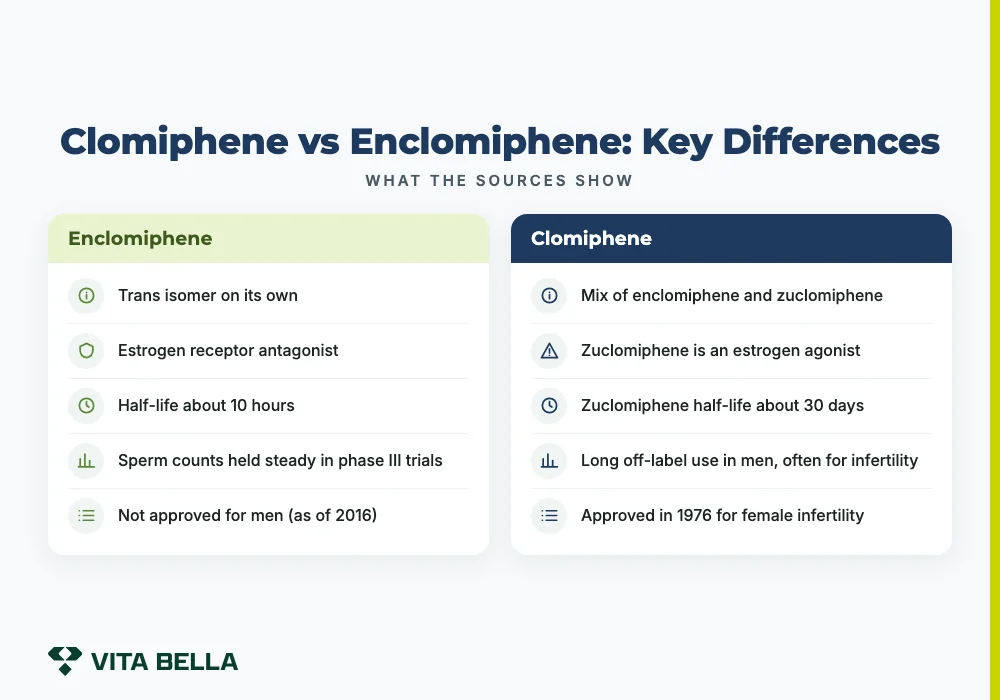
Clomiphene is not a single compound. It is a mix of two stereoisomers: enclomiphene (the trans isomer) and zuclomiphene (the cis isomer). Studies comparing the three found clinically important pharmacologic differences between them (Rodriguez et al., 2016).
Enclomiphene is an estrogen receptor antagonist. It occupies estrogen receptors in the hypothalamus, which blocks estrogen's negative feedback and lets the pituitary release more luteinizing hormone (LH) and follicle-stimulating hormone (FSH). Zuclomiphene works differently: it is an estrogen receptor agonist, and studies linked it to the estrogenic side effects often reported with clomiphene. Its half-life is about 30 days, compared with about 10 hours for enclomiphene, and the reviewers linked it to side effects that persist beyond the drug's therapeutic effect (Rodriguez et al., 2016). In an early baboon study run by the drug's developer, zuclomiphene alone did not significantly raise testosterone, while enclomiphene and clomiphene did.
That is the rationale behind enclomiphene. The reviewers described it as a hypothesis: enclomiphene might deliver the testosterone benefit of clomiphene, including in men who want to maintain fertility, without some of clomiphene's side effects. They noted that the hypothesis had yet to be proven in men with hypogonadism (Rodriguez et al., 2016). One of the review's authors disclosed speaking, research, and consulting ties to Repros Therapeutics, the company developing enclomiphene. Understanding the clomiphene vs enclomiphene difference starts with this isomer distinction.
Key differences between clomiphene and enclomiphene:
- Composition: clomiphene is a two-isomer mix; enclomiphene is the trans isomer alone.
- Receptor activity: enclomiphene is an estrogen receptor antagonist; zuclomiphene, the other isomer in clomiphene, is an estrogen receptor agonist.
- Half-life: about 30 days for zuclomiphene and about 10 hours for enclomiphene.
- Regulatory status: clomiphene was approved by the FDA in 1976 to treat female infertility and is used off-label in men. Enclomiphene has not been approved for men: in 2007 the FDA did not approve it for secondary hypogonadism, finding a rise in testosterone alone insufficient evidence, and a 2015 meeting to review its application was canceled (Rodriguez et al., 2016). In the US, enclomiphene is available as a compounded medication.
| Property | Clomiphene | Enclomiphene |
|---|---|---|
| Isomers | Trans (enclomiphene) and cis (zuclomiphene) | Trans only |
| Estrogen receptor action | Mixed: zuclomiphene is an agonist | Antagonist |
| Half-life | Zuclomiphene component about 30 days | About 10 hours |
| LH and FSH | Raised | Raised |
| Sperm counts | Long off-label use in men, especially with infertility | Held steady in phase III trials |
| FDA status (as of 2016) | Approved for female infertility; off-label in men | Not approved for men |
Summary based on Rodriguez et al. (2016).
How SERMs raise the body's own testosterone
Both clomiphene and enclomiphene target the hypothalamic-pituitary-gonadal (HPG) axis. The mechanism explains why both drugs can raise testosterone without shutting down sperm production.
The hypothalamus monitors circulating estrogen. High estrogen signals it to reduce gonadotropin-releasing hormone (GnRH). Less GnRH means less LH and FSH from the pituitary, and less LH means the testes produce less testosterone. That is the feedback loop these drugs interrupt.
SERMs block estrogen receptors in the hypothalamus. The brain reads the signal as though estrogen is lower than it is, the pituitary releases more LH and FSH, and the testes produce more testosterone. Because the testes keep receiving that signal, sperm production is not suppressed the way it is with external testosterone.
This is the core difference from testosterone therapy, which suppresses the HPG axis and does not improve compromised sperm production (Hohl et al., 2025).
Effects on testosterone are the best-studied part. A 2022 systematic review of 19 studies with 1,642 men, 15 of them observational, pooled 17 studies with 1,279 men and found that total and free testosterone, LH, FSH, SHBG, and estradiol increased during clomiphene treatment (Huijben et al., 2022). A 2025 meta-analysis of randomized trials that pooled clomiphene and enclomiphene in men with functional hypogonadism and total testosterone of 300 ng/dL or less found that SERM therapy raised total testosterone by about 274 ng/dL more than placebo, with higher LH and FSH; the authors rated this as moderate-quality evidence. Total testosterone did not differ significantly from testosterone gel, while LH and FSH were higher with SERMs (Hohl et al., 2025).
SHBG rose during clomiphene treatment in the mostly observational 2022 review but did not differ significantly from placebo in the 2025 meta-analysis of randomized trials (Huijben et al., 2022; Hohl et al., 2025). For background on how SHBG shapes testosterone lab results, see our explainer.
Is enclomiphene more effective than clomiphene for men?
That has not been shown. As of the 2016 review, enclomiphene had not been compared directly with clomiphene in men, and the case for enclomiphene for low testosterone rests on its pharmacology: it leaves out zuclomiphene, the long-acting estrogen agonist linked to clomiphene's estrogenic side effects (Rodriguez et al., 2016).
Enclomiphene's trials support its effect on hormones and sperm counts. In two phase III trials of 265 overweight men with secondary hypogonadism, enclomiphene raised testosterone, LH, and FSH to normal levels and maintained sperm counts, while testosterone gel raised testosterone but did not preserve sperm counts (Rodriguez et al., 2016). None of the enclomiphene studies measured symptom improvement or quality of life with validated tools. The reviewers thought a benefit comparable to clomiphene's was a reasonable assumption, but concluded that enclomiphene's effect on symptoms remains unknown, which limits the ability to recommend it (Rodriguez et al., 2016).
Clomiphene has the longer record. In clomiphene male infertility care, the drug has been used off-label for many years, and it is also used for secondary hypogonadism (Rodriguez et al., 2016). In the 2022 review, in which most studies were observational, scores on the Androgen Deficiency in Aging Males questionnaire improved during clomiphene treatment (Huijben et al., 2022). In a placebo-controlled trial, however, sexual function did not improve with a SERM compared with placebo (Hohl et al., 2025). The 2016 reviewers also described clomiphene as a less expensive generic option (Rodriguez et al., 2016).
Without head-to-head trials, the clomiphene vs enclomiphene decision rests on availability, cost, how each drug is tolerated, and a provider's judgment after reviewing labs. A licensed provider determines which option fits, not a generalization about which is universally superior.
Can enclomiphene preserve fertility while boosting testosterone?
The trials so far suggest it can maintain sperm counts while raising testosterone, within the limits of what was studied. This is the most clinically significant distinction between SERM therapy and external testosterone for men with active fertility goals, and for fertility the clomiphene vs enclomiphene question matters less than the choice between a SERM and testosterone therapy.
External testosterone suppresses the HPG axis. LH drops, and sperm production declines. For men who want to keep their fertility while addressing low testosterone, that trade-off can rule testosterone therapy out.
SERMs work in the opposite direction. They raise LH and FSH, which keep the testes active. Enclomiphene fertility benefits, as far as trials show, are about maintenance rather than proven improvement. In trials that excluded men with known fertility problems, enclomiphene raised testosterone while sperm counts held steady, unlike testosterone gel (Rodriguez et al., 2016; Hohl et al., 2025). These trials measured sperm counts, not pregnancy rates. Across randomized SERM trials, sperm concentration did not differ significantly from placebo but was higher than with testosterone gel (Hohl et al., 2025).
For a detailed look at SERM therapy and fertility considerations compared to TRT, the two approaches differ in ways that matter well beyond the initial prescription. A provider can order a semen analysis alongside hormone labs to establish a baseline before starting any protocol.
Does enclomiphene prevent gynecomastia?
Not in any way these studies have shown. On this question the clomiphene vs enclomiphene evidence is thin: no study cited here measured enclomiphene gynecomastia risk directly or compared it with clomiphene.
What the evidence does show is that estradiol rises with SERM therapy. Estradiol increased during clomiphene treatment (Huijben et al., 2022), and across randomized SERM trials it was about 34 pg/mL higher than with placebo and about 18 pg/mL higher than with testosterone gel (Hohl et al., 2025). Elevated estradiol was also among the side effects reported in enclomiphene trials (Rodriguez et al., 2016). Leaving out zuclomiphene removes one estrogen agonist, but rising testosterone can still raise estradiol, so estradiol is part of routine monitoring, along with hematocrit and PSA, which the trials also tracked.
Possible side effects reported with SERM therapy in men:
- In enclomiphene trials: elevated estradiol, headache, and abdominal discomfort, although adverse effects of enclomiphene have not been studied directly (Rodriguez et al., 2016). In the phase III trials, 21% of men had adverse events possibly related to the study drugs, none severe, with no difference between enclomiphene, testosterone gel, and placebo. One man on enclomiphene stopped because of raised hematocrit and hemoglobin, and another because of raised PSA (Hohl et al., 2025).
- In clomiphene studies, most of them observational: side effects were reported in fewer than 10% of participants, and no serious adverse events were reported (Huijben et al., 2022). In one placebo-controlled clomiphene trial, PSA rose within the normal range, and somnolence was reported by five men on clomiphene and none on placebo (Hohl et al., 2025).
Enclomiphene side effects in men have been few in the published trials, but the data are limited. One man in an enclomiphene group died of a stroke and had multiple pre-existing risk factors (Hohl et al., 2025). The authors of the 2025 meta-analysis note that their analysis, the largest pooled analysis of the two drugs, is underpowered for safety endpoints. Provider-supervised protocols are designed to catch changes early and adjust accordingly.
Which SERM is safer for long-term testosterone support?
Neither drug has been shown to be safer over years of use, so in the clomiphene vs enclomiphene choice both require ongoing oversight. Enclomiphene avoids zuclomiphene, whose 30-day half-life was linked to side effects that outlast the drug's therapeutic effect, but the long-term effects of enclomiphene itself remain unknown (Rodriguez et al., 2016). For clomiphene, a retrospective review of men treated for up to seven years reported side effects in 9%, none of them significant (Hohl et al., 2025).
The AUA guideline on testosterone deficiency, which centers on testosterone therapy, emphasizes accurate assessment of total testosterone, symptoms, and signs and proper on-treatment monitoring, and it includes statements for men interested in preserving fertility (Mulhall et al., 2018).
A natural testosterone SERM approach calls for ongoing clinical care, not a one-time prescription. In functional hypogonadism, the authors of the 2025 meta-analysis suggest SERMs may be used temporarily while the underlying cause is addressed (Hohl et al., 2025). Quarterly provider check-ins allow for dose adjustment based on lab values, symptom response, and tolerance.
What a licensed provider evaluates before prescribing
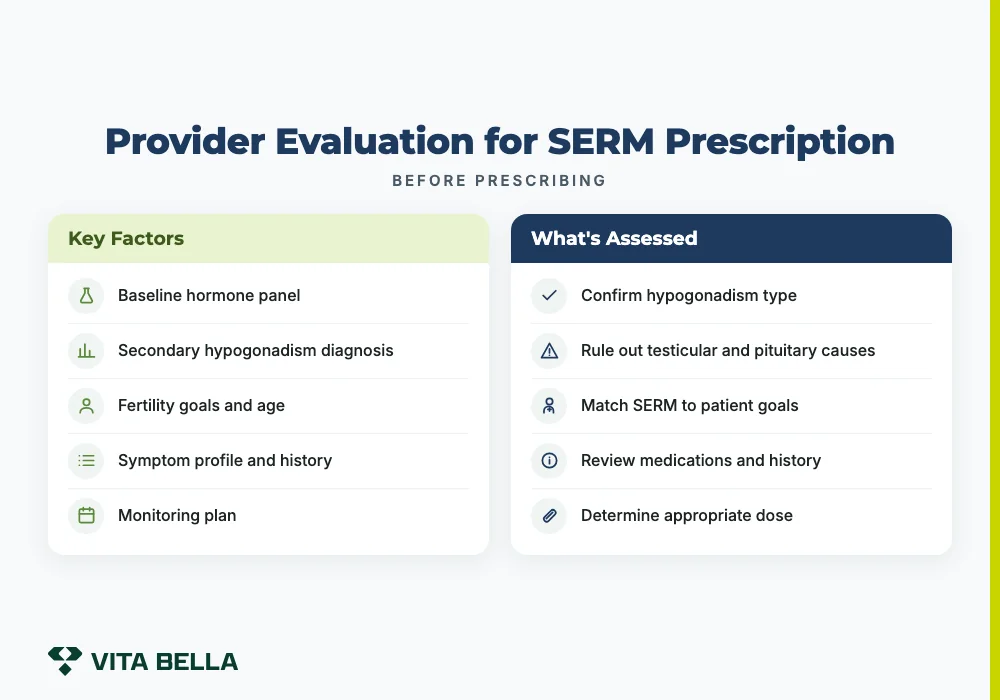
Before writing any prescription in a clomiphene vs enclomiphene evaluation, a licensed provider builds an accurate clinical picture. No recommendation should rest on symptoms alone.
Hormone panel. Labs show whether testosterone is low and whether the cause is primary (a testicular problem) or secondary (a signaling problem).
Who SERMs suit. SERMs work by raising the pituitary signal, so they have been studied mainly in functional secondary hypogonadism, often in men with obesity, where the hypothalamus and pituitary can still respond (Hohl et al., 2025). They are not an option when the testes cannot respond, and testosterone is the only option for men with Kallmann syndrome, a cause of secondary hypogonadism (Rodriguez et al., 2016). The SERM trials also excluded men with high prolactin or known infertility conditions (Hohl et al., 2025).
Diagnosis of secondary hypogonadism. The clinical hallmark is low testosterone alongside low or inappropriately normal LH and FSH. If LH and FSH are already elevated and testosterone is still low, the testes are not responding to the signal, and a SERM will not solve that problem. That diagnostic step matters more than the clomiphene vs enclomiphene choice itself.
Fertility goals and age. A man in his early 30s with active fertility plans has different priorities than a man in his 50s focused on symptoms, and a provider weighs those goals before selecting a protocol.
Medical history and medications. Current medications, liver function, and existing hormonal conditions all factor into the choice. Visual disturbances are a recognized side effect of clomiphene in women (Rodriguez et al., 2016), and the enclomiphene trials excluded men with more advanced cataracts or an abnormal eye exam (Hohl et al., 2025), so any history of vision problems is worth raising.
Monitoring plan. A licensed provider determines the dose after reviewing labs and sets a follow-up schedule. Provider-supported programs at Vita Bella include labs ordered through Quest Diagnostics before the initial consultation, with quarterly provider check-ins as a standard part of the protocol.
Get started with SERM hormone support
If you're comparing clomiphene vs enclomiphene for your own situation, the first step is labs and a provider who understands the full hormone picture. Get Started to begin Vita Bella's intake process and find out whether SERM therapy fits your profile.
Frequently asked questions
Clomiphene is a mix of two isomers: enclomiphene (trans) and zuclomiphene (cis). Enclomiphene is the trans isomer on its own, an estrogen receptor antagonist with a half-life of about 10 hours. Zuclomiphene is an estrogen receptor agonist with a half-life of about 30 days, and it was linked to the estrogenic side effects reported with clomiphene (Rodriguez et al., 2016).
That has not been shown: as of the 2016 review, the two had not been compared directly in men. Clomiphene raised testosterone, LH, and FSH in a 2022 meta-analysis (Huijben et al., 2022), and enclomiphene did the same in phase II and III trials while maintaining sperm counts (Rodriguez et al., 2016). A 2025 meta-analysis pooling both found the same pattern versus placebo (Hohl et al., 2025).
No study cited here measured gynecomastia with enclomiphene. Estradiol still rises with SERM therapy (Hohl et al., 2025), and elevated estradiol was among the side effects reported in enclomiphene trials (Rodriguez et al., 2016), so providers monitor estradiol throughout treatment.
The trials so far suggest it can maintain sperm counts. In trials that excluded men with known fertility problems, enclomiphene raised testosterone while sperm counts held steady, unlike testosterone gel (Rodriguez et al., 2016). Those trials measured sperm counts, not pregnancy rates, and across randomized SERM trials sperm concentration did not differ significantly from placebo (Hohl et al., 2025).
Long-term comparative safety data are lacking. Enclomiphene avoids zuclomiphene, but the long-term effects of enclomiphene itself remain unknown (Rodriguez et al., 2016). For clomiphene, a retrospective review of up to seven years reported side effects in 9%, none significant (Hohl et al., 2025). Both drugs require ongoing provider oversight and regular lab monitoring.
Sources
- Hohl A et al. (2025). Clomiphene or enclomiphene citrate for the treatment of male hypogonadism: a systematic review and meta-analysis of randomized controlled trials. Archives of Endocrinology and Metabolism. PubMed
- Rodriguez KM et al. (2016). Enclomiphene citrate for the treatment of secondary male hypogonadism. Expert Opinion on Pharmacotherapy. PubMed
- Huijben M et al. (2022). Clomiphene citrate for men with hypogonadism: a systematic review and meta-analysis. Andrology. PubMed
- Mulhall JP et al. (2018). Evaluation and Management of Testosterone Deficiency: AUA Guideline. The Journal of Urology. PubMed