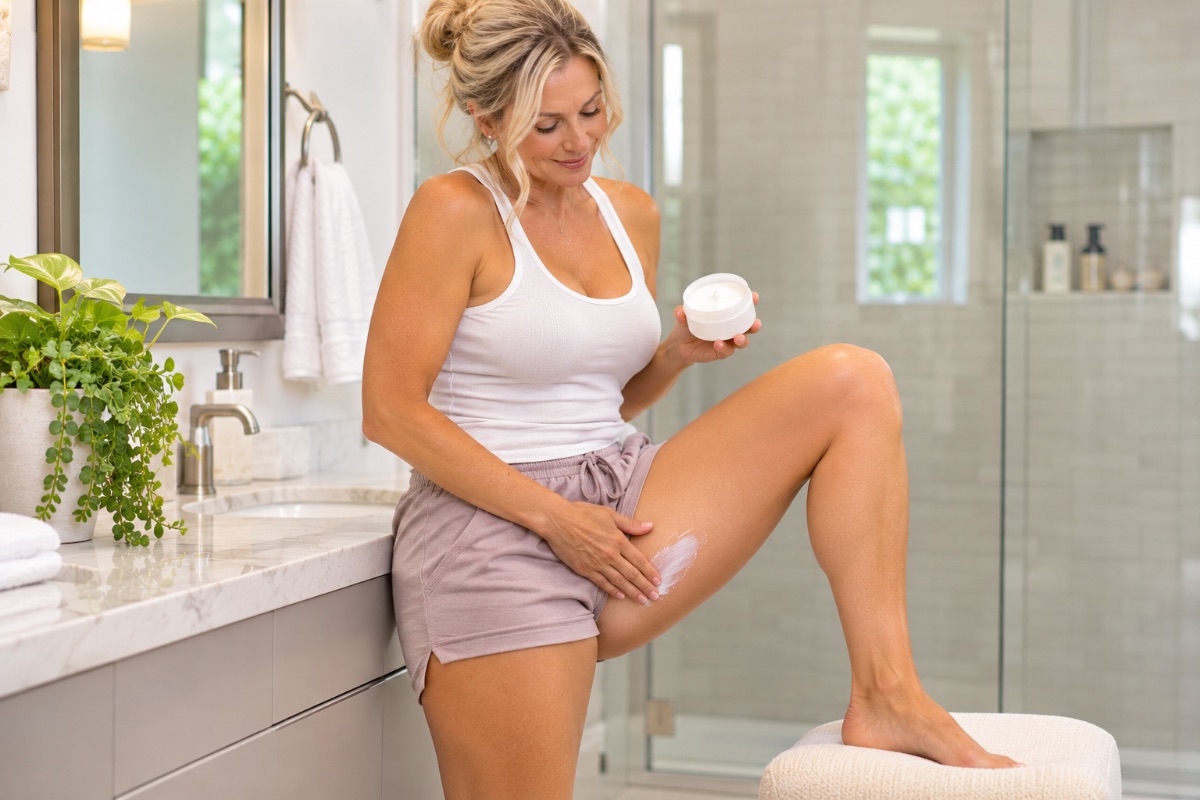
Testosterone cream for women is a transdermal form of testosterone, applied once a day to a small area of clean, dry skin such as the upper outer thigh or the back of the calf. Transdermal testosterone has strong research behind it for low sexual desire with distress after menopause: clinical trials show better desire, arousal, and pleasure for postmenopausal women with low desire that causes distress, and clinical guidelines support its use. A licensed provider reviews your labs and health history and explains which options fit your goals, and you can start that conversation through Vita Bella's hormone therapy care.
What does testosterone do in a woman's body?
Testosterone is a normal female hormone, not only a male one. A 2025 review in Climacteric describes it as a hormone with important effects in many tissues (Davis, 2025). It works in more than one way. It can act directly on androgen receptors, or the body can convert it to the more potent androgen dihydrotestosterone or to estradiol (Davis et al., 2019).
How levels change with age
Testosterone levels in women decline during the reproductive years and appear to be maintained after age 65 (Davis et al., 2019). Because many midlife changes have more than one cause, a provider looks at the full hormone picture rather than a single number. The guide to low testosterone signs in women covers what to raise at an evaluation.
Does testosterone cream work for women?
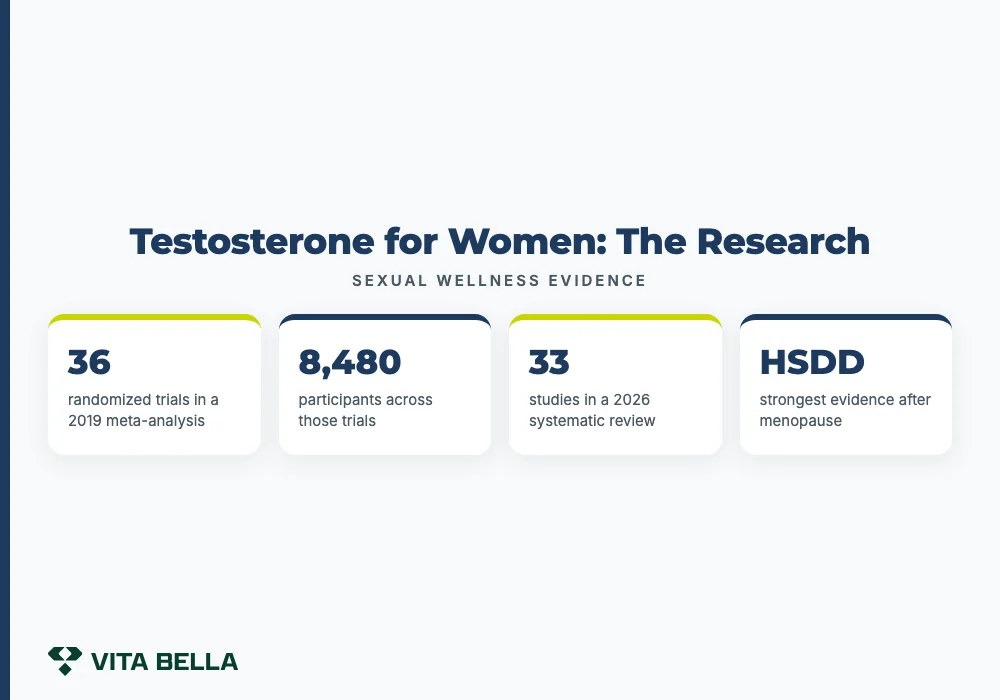
Yes, for sexual wellness, which is where the research on testosterone for women is focused. The results are for hypoactive sexual desire disorder (HSDD), meaning low sexual desire that causes distress, in postmenopausal women.
- Meta-analysis, 2019: 36 randomized trials with 8,480 participants. In postmenopausal women, testosterone significantly improved sexual desire, arousal, orgasm, pleasure, responsiveness, self-image, and the frequency of satisfying sexual events, and it reduced sexual concerns and distress (Islam et al., 2019).
- Systematic review, 2026: across 33 studies, testosterone therapy was effective for improving key aspects of sexual function. The strongest evidence was in postmenopausal women, where randomized trials show robust benefit, and early evidence in premenopausal women was promising (Furlan et al., 2026).
- Global Consensus, 2019: endorsed by The Endocrine Society, The North American Menopause Society, and other professional societies, it supports testosterone therapy for postmenopausal women with HSDD, with data supporting a moderate therapeutic effect (Davis et al., 2019).
- ISSWSH guideline, 2021: it recommends transdermal testosterone for women with HSDD after a full biopsychosocial assessment (Parish et al., 2021).
- Clinical review, 2025: a review in Obstetrics & Gynecology summarizes these guidelines for clinicians treating perimenopausal and postmenopausal women with HSDD (Kling, 2025).
The ISSWSH guideline concludes that despite substantial evidence on safety, efficacy, and clinical use, access to testosterone therapy for HSDD in women remains a significant unmet need (Parish et al., 2021).
Why the cream form works well
The benefits of testosterone cream for women follow from how it is delivered.
- Physiologic dosing: small daily amounts can keep testosterone within the normal premenopausal female range, the dosing behind the trial evidence (Davis et al., 2019).
- Neutral effect on cholesterol: compared with oral testosterone, transdermal forms such as a cream or patch keep the lipid profile neutral (Islam et al., 2019). Testosterone dosed to the female range has also not been associated with increases in blood pressure, blood glucose, or HbA1c (Davis et al., 2019).
- Adjustable: the amount can be refined in small steps based on follow-up labs and your response.
- Convenient: it is applied at home, and follow-up can happen through telehealth.
Commercial and compounded creams
Testosterone cream for women can be a measured female dose of a commercially made transdermal product or a compounded testosterone cream for women, prepared by a licensed compounding pharmacy pursuant to a valid prescription. A licensed provider evaluates which options fit after reviewing labs and clinical history.
Who is testosterone cream for?
Transdermal testosterone, including cream, has its strongest evidence for postmenopausal women with HSDD, diagnosed after a full assessment (Davis et al., 2019; Parish et al., 2021). For women before menopause, early evidence is promising (Furlan et al., 2026). A licensed provider determines candidacy after a full clinical evaluation that includes lab work and a health history review.
What a provider typically reviews when evaluating whether testosterone fits:
- Your goals: especially whether low sexual desire with distress is the main concern
- Hormone panel: total and free testosterone, estradiol, SHBG, and other relevant markers ordered through Quest Diagnostics; a baseline testosterone level is the starting point for monitoring
- Symptom history: onset, duration, and how your symptoms fit together
- Thyroid and adrenal function: so other contributing factors can be identified
- Cardiovascular and metabolic markers: part of a complete baseline
- Existing conditions and medications: reviewed for interactions
- Pregnancy plans: confirmed before starting, since testosterone is not used during pregnancy (Parish et al., 2021)
How to apply testosterone cream for women
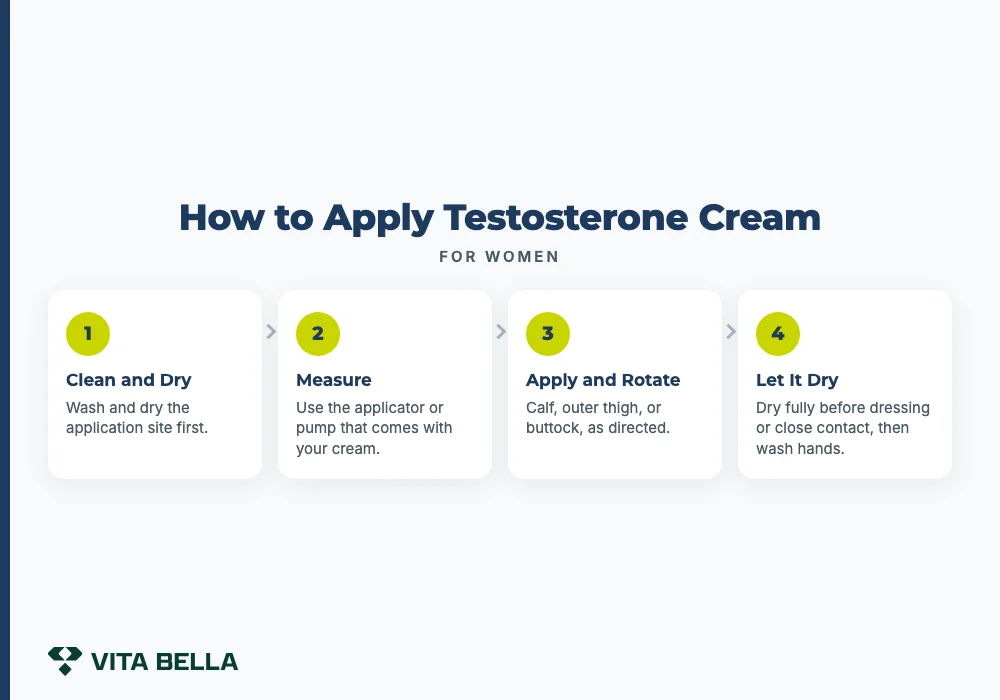
The cream is applied once a day to clean, dry skin, following your provider's instructions for amount and site. Good technique keeps absorption consistent.
Wash and dry the application site first. Apply the prescribed amount with the measured applicator or pump dispenser that comes with your formulation. Let the site dry fully before dressing, then wash your hands. Store the cream at room temperature, away from heat and direct sunlight.
Where to apply testosterone cream for women
Guidelines describe applying topical testosterone to the back of the calf, the upper outer thigh, or the buttock (Parish et al., 2021). Choose clean, intact skin. Let the cream dry fully before close contact with partners, children, or pets, so the dose stays with you. Your provider's and pharmacy's instructions for your specific formulation come first.
When will you notice results?
Response builds gradually with consistent daily use. In clinical trials, many women noticed improvement after about 4 weeks, benefits emerged on average at 6 to 8 weeks, and the full effect came at about 12 weeks (Parish et al., 2021). Guidelines describe a simple check-in rhythm (Davis et al., 2019):
- Before starting: a baseline total testosterone level is measured.
- 3 to 6 weeks after starting: a repeat level checks that testosterone sits within the normal premenopausal female range, so the dose can be fine-tuned.
- Ongoing: your provider reviews your response, with a total testosterone level about every 6 months.
Consistent daily application helps keep levels steady, and adjustments are based on your labs and how you feel.
How testosterone cream fits with other delivery methods
Testosterone for women can be delivered in several ways. The ISSWSH guideline favors transdermal forms, such as a cream or gel, because small daily doses can keep levels within the normal premenopausal female range (Parish et al., 2021).
For a detailed look at all hormone delivery methods for women, that overview covers each format in depth, and the guide to testosterone pellets for women explains how pellets compare. Sex hormone-binding globulin (SHBG) binds testosterone in the blood, so providers read it alongside total testosterone, and it can help explain why two women on similar treatment respond differently (Parish et al., 2021). Learn more about how SHBG interacts with testosterone levels.
Can testosterone cream help with weight loss?
Questions about testosterone cream for women weight loss come up often. Testosterone therapy for women is used for sexual wellness, and for weight goals, the matching option is medical weight loss. The guide to testosterone for women and weight loss explains which option fits which goal.
How providers keep treatment on track
Monitoring is part of what makes testosterone cream work well. Labs confirm that levels stay within the normal premenopausal female range, and regular check-ins keep the dose matched to your response. In the trials included in the 2019 meta-analysis, no serious adverse events were recorded (Islam et al., 2019). Possible side effects, uncommon at physiological doses, are usually mild and reversible under provider monitoring.
How a telehealth evaluation works
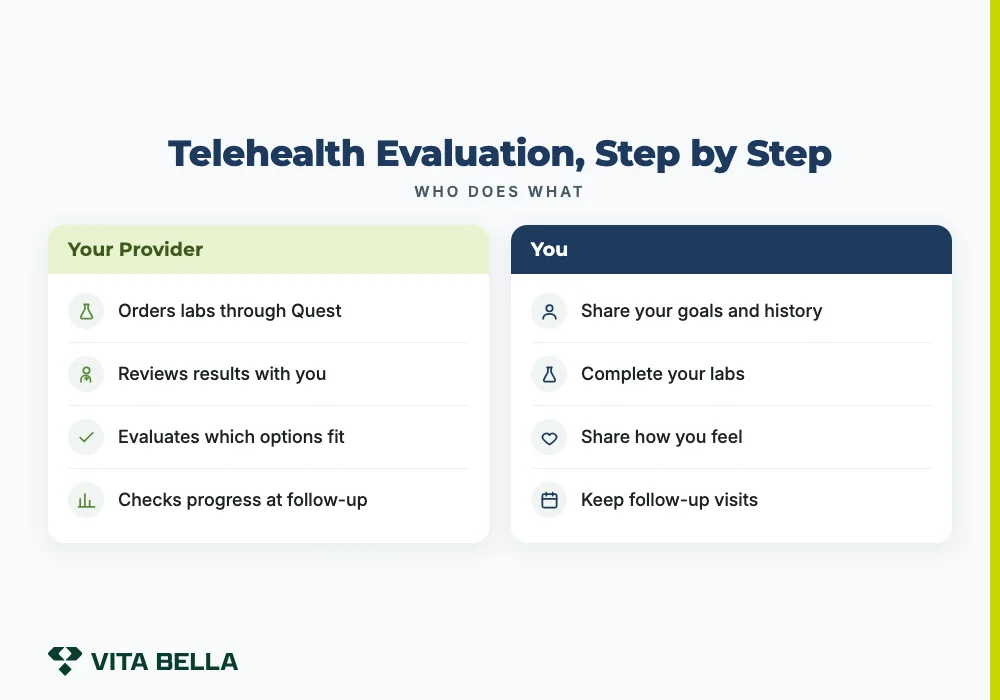
Testosterone for women is a clinical decision made with a provider. A telehealth evaluation typically follows these steps:
- Labs first: labs are ordered through Quest Diagnostics and reviewed before your provider visit.
- Initial consultation: your provider goes over your lab results, symptom history, and goals.
- Clinical decision: your provider evaluates which options fit your goals.
- Follow-up: visits review labs, confirm levels stay within the female range, and track your response.
For a broader overview of testosterone therapy for women, that resource covers the full picture.
At Vita Bella, you choose your provider from licensed clinicians across 47 states. No AI in clinical care: every visit is a 1:1 conversation with a provider.
Ready to talk to a provider about testosterone cream?
If you are exploring testosterone cream, the next step is a conversation with a licensed provider who reviews your labs, symptoms, and health history and explains what fits your goals.
Explore your options at Vita Bella's hormone therapy program, or take the first step now.
Frequently asked questions
Yes, for postmenopausal women with low desire that causes distress. Trials show improvements in desire, arousal, orgasm, and pleasure (Islam et al., 2019), and a 2026 systematic review found that randomized trials show robust benefit after menopause (Furlan et al., 2026). A licensed provider reviews your labs and history first.
Its benefits are in sexual wellness: better desire, arousal, orgasm, and pleasure, and more frequent satisfying sexual events, in postmenopausal women (Islam et al., 2019). As a transdermal form, it can be dosed within the normal premenopausal female range and, compared with oral testosterone, has a neutral effect on cholesterol (Davis et al., 2019; Islam et al., 2019).
Many women notice improvement after about 4 weeks, with average benefits at 6 to 8 weeks and the full effect at about 12 weeks (Parish et al., 2021). Providers review progress at follow-up visits and adjust based on labs and your response.
Guidelines describe the back of the calf, the upper outer thigh, or the buttock (Parish et al., 2021), following your formulation's instructions. Apply it to clean, dry skin and let it dry fully before close contact with others.
Guidelines recommend a baseline total testosterone level, a repeat level 3 to 6 weeks after starting, and regular reviews, so levels stay within the normal premenopausal female range (Davis et al., 2019; Parish et al., 2021).
Sources
- Islam RM, Bell RJ, Green S, Page MJ, Davis SR. (2019). Safety and efficacy of testosterone for women: a systematic review and meta-analysis of randomised controlled trial data. Lancet Diabetes & Endocrinology. PubMed
- Furlan VA, Hammad MAM, Quesada S, Nguyen S, Yih J. (2026). Testosterone therapy for female sexual dysfunction: a systematic review of the literature demonstrating outcomes in premenopausal and postmenopausal women. Journal of Sexual Medicine. PubMed
- Davis SR et al. (2019). Global Consensus Position Statement on the Use of Testosterone Therapy for Women. Journal of Clinical Endocrinology and Metabolism, 104(10): 4660–4666. PubMed
- Parish SJ, Simon JA, Davis SR, et al. (2021). International Society for the Study of Women's Sexual Health Clinical Practice Guideline for the Use of Systemic Testosterone for Hypoactive Sexual Desire Disorder in Women. Journal of Sexual Medicine. PubMed
- Kling JM. (2025). Testosterone for the Treatment of Hypoactive Sexual Desire Disorder in Perimenopausal and Postmenopausal Women. Obstetrics and Gynecology. PubMed
- Davis SR. (2025). Not just sex: other roles for testosterone in women. Climacteric. PubMed